Immigration Law
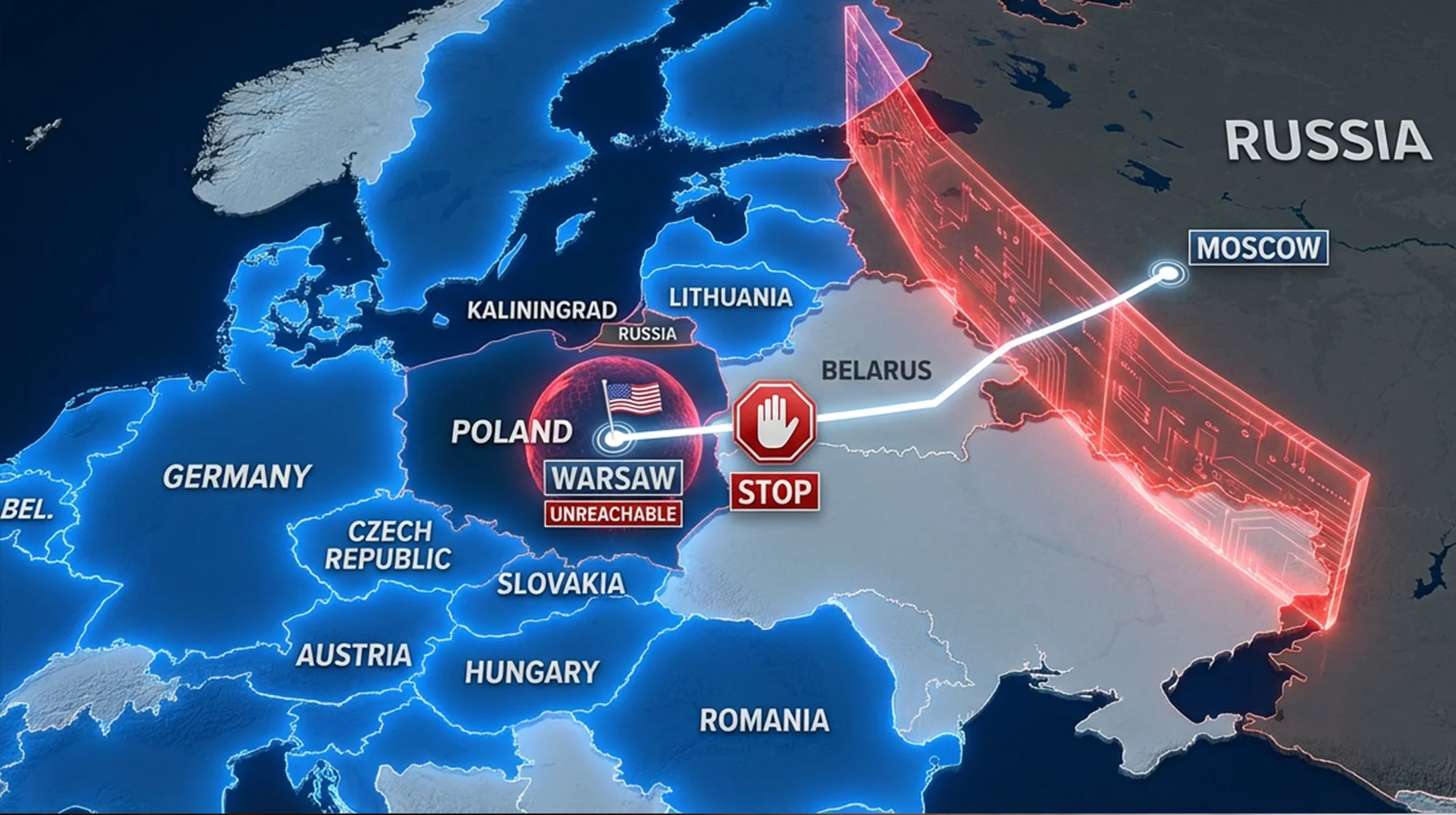
On November 7, 2025, the European Commission announced the implementation of “adapted rules” governing the issuance of multiple-entry Schengen visas to Russian nationals residing in the Russian Federation who apply inside Russia. While framed as a request for uniform application by EU member states’ consular posts in Russia, the practical effect has been a near-shutdown of Schengen access for this population.
This development has immediate and serious consequences for Russian immigrant visa (IV) applicants who must travel to Poland—specifically Warsaw—for their U.S. consular interviews. Below is a clear breakdown of what changed, why it matters, and what (limited) options may remain.
Watch The Video Overview
Since October 2021, Russian nationals residing in the Russian Federation have generally been unable to apply for U.S. immigrant visas in Russia. As a result, the U.S. Embassy in Warsaw was designated as the primary interview post for most Russian IV cases, with a narrow carve-out for certain IR-5 cases in Almaty or Tashkent.
To reach Warsaw, however, Russian nationals must first obtain a Schengen visa, which permits short-term travel (up to 90 days in any 180-day period) within the Schengen Area.
Following Russia’s invasion of Ukraine in 2022, Poland progressively restricted Schengen visa issuance to Russians applying in Russia. For a time, some applicants used a workaround—securing a Schengen visa through another Schengen country (such as Italy). That workaround effectively ended on November 7, 2025.
Under the European Commission’s decision, EU member states were asked to apply adapted rules uniformly at their consular posts in the Russian Federation. In practice, this has meant:
According to official notices from the Embassy of the Republic of Poland in Moscow, Polish consulates have suspended acceptance of Schengen visa applications under ordinary procedures.
The Schengen Area currently includes 29 countries, all applying the same short-stay visa rules. A Schengen visa issued by any one member state is generally valid for travel throughout the entire area.
Key points:
Poland has exercised that discretion aggressively with respect to Russian nationals residing in Russia.
At present, Schengen visas issued by Polish authorities to Russian nationals residing in the Russian Federation are limited to exceptional cases only.
Issuance may be considered solely for:
Examples of potentially relevant factors include:
A key—and often misunderstood—aspect of the current policy is consistency of purpose:
A scheduled U.S. consular appointment in Poland is evaluated only in conjunction with the justification for entry into Poland itself.
In other words, the reason for seeking a Polish Schengen visa must directly derive from—and align with—the purpose of the U.S. visa application. A mismatch between the two is likely fatal to the Schengen application.
Given these restrictions, entry into Poland may be impossible for Russian nationals residing in Russia—even if they:
Without a valid Polish-issued Schengen (or national) visa, issued by the Polish Consular Department in Moscow, travel to Poland may be blocked outright.
This is true notwithstanding appointments at the U.S. Embassy in Warsaw or the U.S. Consulate General in Kraków.
1. Family Ties or Essential Travel Categories
Certain applicants may qualify for a multiple-entry Schengen visa if they can clearly demonstrate:
Even in these cases, applicants must show they are low-risk and reliable, and approvals remain highly discretionary.
2. Applying from Another Country (Residence-Based)
A potentially more viable option arises only if the Russian national resides outside the Russian Federation.
In many non-EU countries, Schengen visa applications are accepted only from lawful residents (not visitors). If a Russian citizen:
the chances of issuance may improve significantly.
In some cases, permanent residence abroad may also open the door to processing the U.S. immigrant visa at the U.S. Embassy in that country, rather than Warsaw.
3. Third-Country National (TCN) Processing
Third-country national processing remains an area to watch. Policies continue to evolve, and acceptance varies by post and by country of residence.
This option requires careful, case-specific analysis, and applicants should not assume availability without confirmation.
For Russian nationals residing in the Russian Federation, Schengen visa issuance—particularly for travel to Poland—has become extraordinarily limited. Exceptions exist, but they are narrow, discretionary, and tightly scrutinized.
Anyone affected should:
Policy in this area remains fluid, and developments may occur with little notice.
If you or a family member is navigating a U.S. immigrant visa case affected by Schengen travel restrictions, strategic planning is critical. Missteps can lead to prolonged delays—or complete inability to attend a scheduled interview.
If you need experienced legal guidance for your immigration case, contact me at SG Legal Group. My team and I help clients assess viable interview locations, Schengen feasibility, and alternative strategies in this rapidly changing environment. Consultations are available in English, Russian, or Romanian. Call 410-618-1288 or visit our Contact page to schedule a consultation.
This article provides general information and is not legal advice. For advice about your specific situation, please contact me directly.
Oleg Gherasimov, Esq.
Stay informed with our latest articles and resources.