Immigration Law
Recent changes in U.S. immigration policy have created deep uncertainty for immigrant visa (IV) applicants and their families. In addition to the Department of State’s pause on immigrant visa issuance for nationals of 75 countries, a new Presidential Proclamation has imposed separate, overlapping restrictions on nationals of 38 countries and individuals holding documents issued by the Palestinian Authority.
I recently addressed the basics of the 75-country immigrant visa issuance pause in a prior article. This follow-up focuses on practice updates and real-world trends I am seeing in immigrant visa processing, particularly how consular posts and the U.S. Department of State are handling interviews, refusals, and delays under these new rules.
This article is not a do-it-yourself guide. Instead, it is meant to help prospective clients understand why these cases have become legally and strategically complex—and why navigating them without experienced legal guidance can carry serious risks.
Watch The Video Overview
Immigrant visa applicants are now dealing with two separate but related frameworks:
Some countries are affected by both measures. Others are affected by only one. From a practical standpoint, however, the result is similar: many applicants can move forward procedurally but cannot receive a visa right now.
One of the most confusing aspects of the current environment is that immigrant visa interviews have not stopped.
The National Visa Center continues to schedule interviews for applicants whose cases are deemed documentarily complete, even if the applicant’s nationality is subject to a ban or pause.
This has led to understandable frustration. Many applicants assume that an interview means issuance is possible. Under current policy, that is often not true.
The Department of State has publicly stated that applicants may still submit applications and attend interviews, even if they are ultimately ineligible for visa issuance or admission at this time.
In practice, I am seeing two main outcomes at interviews for affected applicants:
1. INA §212(f) Refusals (Travel Ban Cases)
A refusal under INA §212(f) means this:
This type of refusal:
If and when the Presidential restriction is lifted, visa processing can usually resume using the same approved petition, assuming the underlying relationship or job still exists.
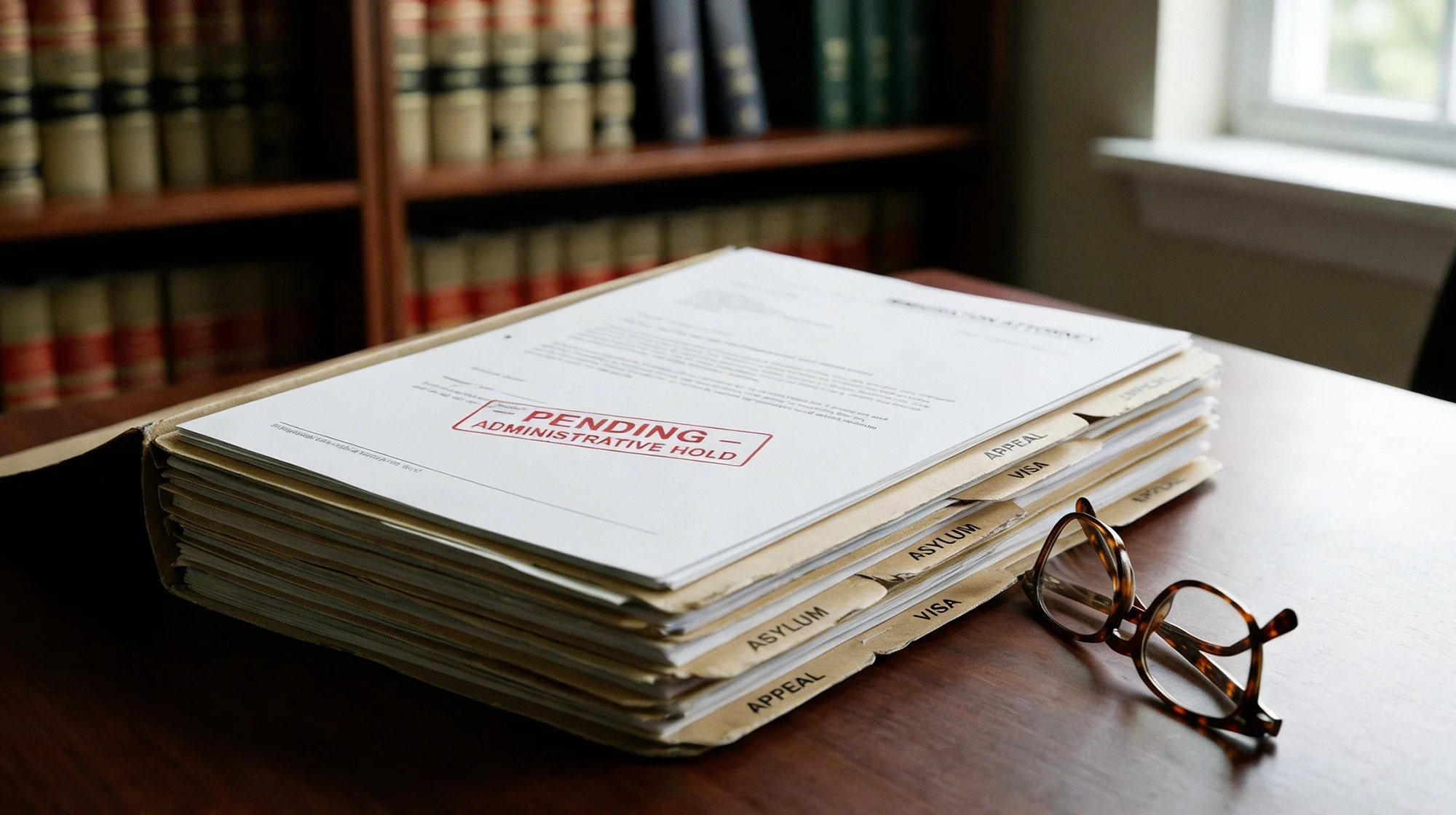
2. INA §221(g) Refusals (Administrative Hold)
Some applicants—particularly those affected by the 75-country DOS pause rather than the Presidential Proclamation—are receiving 221(g) refusals.
A 221(g) refusal means:
In many paused cases, a 221(g) keeps the file in line so it can move forward more quickly if the pause is lifted.
Although counterintuitive, attending an interview can sometimes be beneficial, even when issuance is unlikely.
For certain nationalities, appearing for the interview allows the government to:
For example, in some Iranian cases, attending the interview—even with an expected refusal—can position the case to move faster once restrictions change.
This is a strategic decision, not a universal recommendation. The risks and benefits depend heavily on the applicant’s country, visa category, and personal circumstances.
Some applicants may prefer to delay their immigrant visa case rather than appear for an interview during a ban or pause. That approach is possible—but it must be handled carefully.
Under INA §203(g), a visa case can be terminated if the applicant fails to take action within one year after being notified that a visa is available.
In plain terms:
Based on NVC guidance, maintaining contact can include actions such as:
Once a case is already at a consular post, options become more limited. Some posts require applicants to miss an interview before rescheduling is allowed. Others permit communication through post-specific systems.
This is an area where missteps can have permanent consequences, particularly if a case is terminated unintentionally.
For applicants affected only by the DOS pause, and not by the Presidential travel ban, the legal landscape is different.
The DOS pause is tied to concerns about INA §212(a)(4) (likelihood of becoming a public charge). This ground of inadmissibility is also not waivable in most cases—but, critically, it does not invalidate an approved petition.
For some paused applicants, attending the interview and receiving a 221(g) may be prudent so the case is fully processed and ready if the pause ends.
In February 2026, several civil rights organizations—including the National Immigration Law Center—filed suit in federal court challenging the Department of State’s rationale for the 75-country pause. The lawsuit argues that DOS has improperly claimed that immigrants from certain countries are more likely to rely on public benefits.
While litigation may eventually affect policy, no immediate relief should be assumed. Consular officers continue to apply the current guidance.
What I am seeing across all of these cases is this: the law may look static on paper, but practice is fluid and unforgiving.
Decisions about whether to:
are not administrative choices—they are legal strategy decisions with long-term consequences.
Handled incorrectly, a case can stall for years or collapse entirely, even when the underlying petition is strong.
The combination of Presidential travel bans and the 75-country immigrant visa issuance pause has fundamentally changed immigrant visa practice. Interviews are moving forward, but issuance often is not. Refusals are being issued, but approved petitions generally remain intact.
Understanding the difference—and knowing how to respond—requires careful legal judgment.
If you need experienced legal guidance for your immigrant visa case, contact me at SG Legal Group. My team and I help clients evaluate interview strategy, refusal consequences, and long-term planning in this rapidly changing environment. Consultations are available in English, Russian, or Romanian. Call 410-618-1288 or visit our Contact page to schedule a consultation.
This article provides general information and is not legal advice. For advice about your specific situation, please contact me directly.
Oleg Gherasimov, Esq.
Stay informed with our latest articles and resources.