Accidents
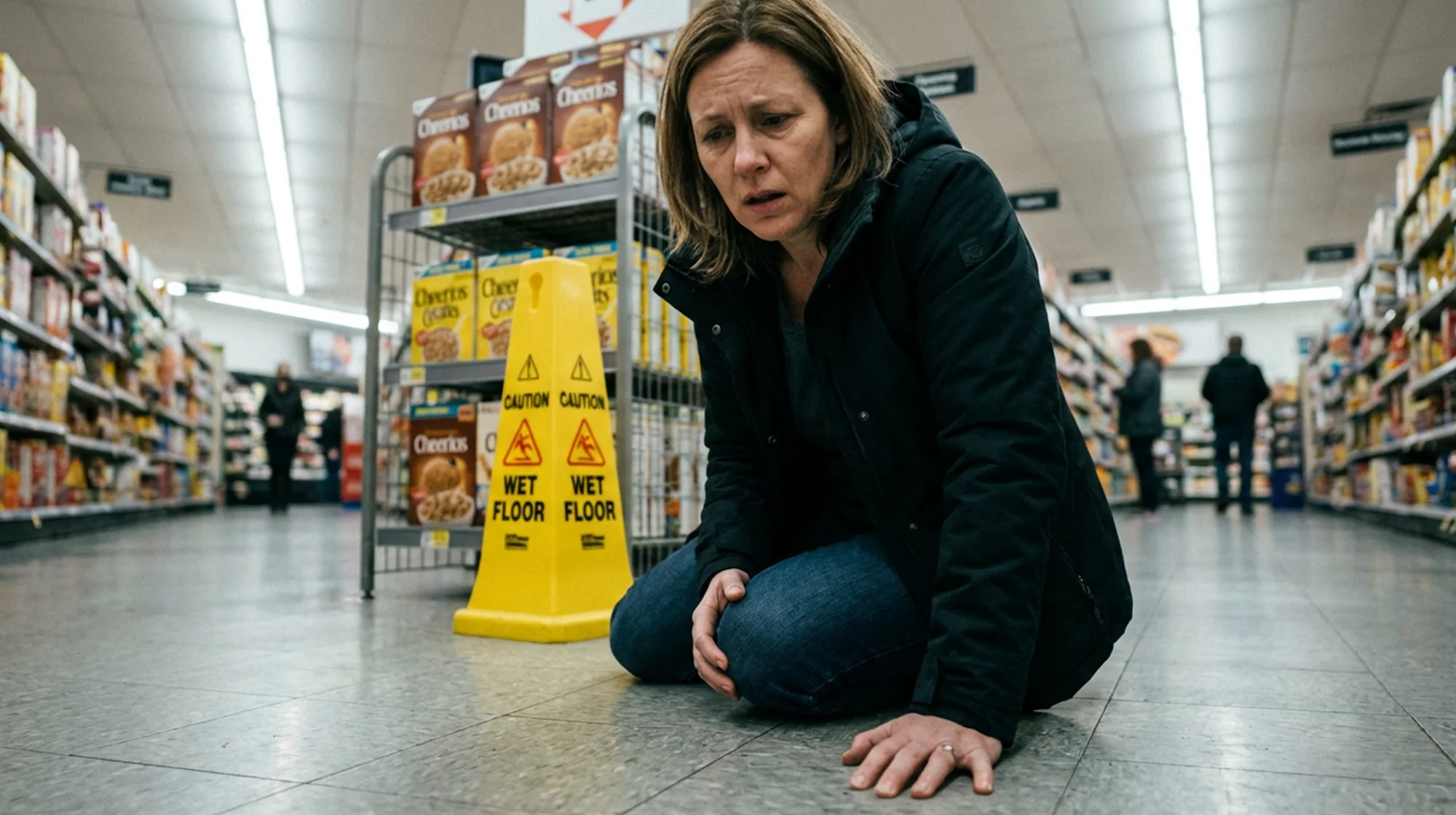
You didn't plan on getting hurt today. Maybe you slipped on a wet floor in a grocery store, tripped on a broken stair in your apartment building, or went down hard on an icy sidewalk outside a restaurant. Now you're dealing with pain, medical bills, and a question that won't stop running through your head: Can I actually do anything about this?
The short answer is yes — but only if you take the right steps, and only if you understand how Maryland law works. Because here's what most people don't realize: Maryland is one of the toughest states in the country when it comes to fall injury claims. One wrong move — sometimes literally — and your entire case can disappear.
I'm Joshua Sussex, a personal injury attorney and partner at SG Legal Group. I handle premises liability cases throughout Maryland, and I've seen firsthand how a strong claim can be derailed by mistakes that happen in the first 24 to 72 hours after a fall. This article is designed to give you the information you need right now — not legal theory, but practical, actionable steps to protect yourself and your rights.
Before we get into the legal side, let me put the scope of this problem into perspective. Falls aren't a minor inconvenience. They are a leading cause of serious injury in the United States.
According to the National Safety Council, more than 8.8 million people were treated in emergency rooms for fall-related injuries in a single recent year. Falls are the number one cause of non-fatal emergency room visits across every age group. The CDC reports that one in five falls results in a serious injury like a broken bone or head trauma — and fall-related deaths have been climbing steadily for more than two decades.
The financial toll is staggering. Medical costs associated with falls reach tens of billions of dollars annually nationwide, and the average hospital stay for a fall injury can run $30,000 to $40,000 or more. These aren't abstract numbers. When you're lying on a grocery store floor with a fractured wrist or a concussion, you're suddenly part of them.
The point is this: if you were seriously hurt in a fall, you are not being dramatic by wanting answers. You're dealing with a real injury that has real consequences, and you deserve to know your legal options.
Fall injury claims in Maryland fall under an area of law called premises liability. The basic concept is straightforward: property owners have a legal duty to maintain safe conditions for the people who come onto their property. When they fail to do that, and someone gets hurt as a result, the property owner can be held responsible.
But "straightforward" and "easy to prove" are two very different things. To successfully bring a fall injury claim in Maryland, you generally need to establish four things.
First, the property owner owed you a duty of care. Second, the property owner breached that duty by allowing a dangerous condition to exist. Third, that dangerous condition directly caused your fall and your injuries. Fourth, you actually suffered damages — medical bills, lost wages, pain and suffering.
The first element — duty of care — is where Maryland law gets particularly specific, and it's something most people have never heard of.
Here's something that surprises nearly every client I work with: in Maryland, the level of care a property owner owes you depends entirely on why you were on their property. Maryland still uses an old common law classification system that places you into one of several categories, and each category comes with a different standard.
If you were a business invitee — meaning you were at a store, restaurant, office, or other business as a customer or for a purpose connected to the business — the property owner owes you the highest level of care. They must take reasonable steps to keep the premises safe, actively inspect for hazards, fix dangerous conditions within a reasonable time, and warn you about hazards that aren't immediately obvious. This is the standard that applies to most grocery store falls, restaurant injuries, and retail store incidents.
If you were a social guest at someone's home, you fall into a different category called a licensee by invitation. The homeowner must take the same care they take of themselves and their family, and they must warn you about known dangers you wouldn't likely discover on your own. But they don't have to actively go looking for problems the way a business does.
There are also lower categories — bare licensees and trespassers — where the duty of care drops significantly. The bottom line is that your status matters enormously, and it's one of the first things I assess when someone comes to me after a fall.
If there's one thing I need you to take away from this article, it's this: Maryland follows a rule called contributory negligence, and it is the single biggest threat to your fall injury claim.
Maryland is one of only four states — plus the District of Columbia — that still follows pure contributory negligence. What does that mean? If the property owner can prove that you were even slightly at fault for your own fall, your claim is completely barred. Not reduced. Not adjusted. Gone. One hundred percent denied.
I've written about this in more detail in our guide to premises liability standards and contributory negligence, but let me give you the practical version here. Insurance companies know this rule exists, and they will use it aggressively against you.
Here are the kinds of arguments I see insurance adjusters make to try to pin fault on the injured person. They'll say you were looking at your phone when you fell. They'll argue your shoes were inappropriate for the conditions — flip-flops on a wet day, for instance. They'll point to a "Wet Floor" sign that was ten feet away and claim you should have seen it. They'll say you were in an area of the store you shouldn't have been in. They'll suggest you chose to walk through an icy patch when a safer route was available.
Some of these arguments are ridiculous. Some of them, unfortunately, are effective — especially when the injured person didn't preserve the right evidence or made statements early on that the insurance company can twist.
This is why what you do in the hours and days after your fall matters so much.
When you've just fallen and you're in pain, the last thing on your mind is building a legal case. I get it. But the actions you take — or don't take — in the first 24 to 72 hours can make or break your ability to recover compensation. Here's what I tell every client.
Get Medical Attention the Same Day
Even if you think you're "probably fine," see a doctor. Many fall injuries — concussions, soft tissue damage, hairline fractures, internal injuries — don't show symptoms right away. A delay in treatment doesn't just risk your health. It gives the insurance company ammunition to argue that your injuries weren't actually caused by the fall.
Go to urgent care or the emergency room. Be specific about what happened — tell them you fell, where you fell, and exactly what hurts. This creates a medical record that connects your injuries directly to the incident.
Report the Fall and Create an Official Record
If you fell at a business, report it to the manager or owner immediately. Ask them to fill out an incident report. Get a copy before you leave. If they refuse to give you a copy, note the name of the person you spoke with, the time, and what they said.
This incident report does two important things. It establishes an official record that the fall happened, and it puts the property owner on notice — which becomes relevant when we talk about evidence preservation.
One critical warning: when you report the fall, stick to the basic facts. I fell here, at this time, and I'm injured. Do not apologize. Do not speculate about what caused it. Do not say "I should have been watching where I was going." Those words can and will be used against you under Maryland's contributory negligence rule.
Document Everything You Can
Pull out your phone and take photos. Photograph the exact spot where you fell. Get the hazard from multiple angles — the wet floor, the broken step, the ice, the uneven surface, whatever caused the fall. Photograph the surrounding area, including whether there were any warning signs (or a lack of them). Photograph the lighting conditions. Photograph your injuries — bruising, swelling, cuts.
If there were witnesses, get their names and contact information. Witness testimony from other customers or bystanders can be incredibly powerful, especially when they can confirm that no warning signs were posted or that the hazardous condition had been there for a while.
Demand That Surveillance Footage Be Preserved
This is the step most people miss, and it's one of the most important. Most commercial properties — grocery stores, restaurants, retail stores, apartment building lobbies — have security cameras. That footage is often the single most valuable piece of evidence in a fall case because it shows exactly what happened, how long the hazard existed, and whether you did anything wrong.
Here's the problem: many businesses operate on recording loop systems that overwrite footage every 3 to 7 days. Some overwrite within 24 to 48 hours. If no one asks for that footage to be preserved, it will be gone before you even have your first doctor's appointment.
This is one of the most important reasons to contact a fall attorney quickly. One of the very first things I do when a client calls me is send what's called a spoliation letter — a formal demand to the property owner directing them to preserve all surveillance footage, incident reports, maintenance logs, and inspection records related to your fall. If they destroy that evidence after receiving my letter, there can be serious legal consequences, including the court drawing a negative inference against them.
Avoid the Insurance Company's Early Traps
After your fall, the property owner's insurance company may contact you quickly — sometimes within days. They might sound friendly and concerned. They might offer you a fast settlement. They will almost certainly ask for a recorded statement.
Do not give one. Not without talking to an attorney first. Recorded statements are designed to get you to say something — anything — that can be used to argue contributory negligence. A casual "I guess I wasn't really paying attention" can sink your entire case in Maryland.
Similarly, if they send you a medical release form, do not sign it. These broad releases allow the insurance company to dig through your entire medical history looking for pre-existing conditions they can blame for your injuries. Only records directly related to the fall should be shared, and your attorney can ensure that's what happens.
I've spent years going up against insurance companies on behalf of injured people, and their playbook in fall cases is predictable. Understanding their tactics puts you in a much stronger position.
The first move is almost always a lowball settlement offer. They reach out early, before you fully understand the extent of your injuries, and offer a number that sounds reasonable in the moment but is a fraction of what your claim is worth. Studies consistently show that injury victims who have legal representation receive significantly higher settlements than those who don't. Once you accept a settlement, the case is permanently closed — there's no going back if your injuries turn out to be worse than expected.
Beyond the early offer, insurance companies lean heavily on contributory negligence. In most states, if you're 10% or 20% at fault, your recovery is simply reduced by that percentage. In Maryland, it eliminates your recovery entirely. Insurance adjusters know this, and they will look for any angle to argue you share even a sliver of blame. This is why evidence preservation is so critical — without clear evidence that the property owner was solely at fault, the insurance company holds all the leverage.
Another common tactic is delay. The longer they drag out the process, the more financial pressure builds on you. Medical bills pile up, you may be missing work, and the temptation to accept whatever they offer grows. A good fall attorney won't let that happen. We know how to push back against delay and keep the process moving.
If you want to understand more about how these dynamics affect what your claim might be worth, our complete guide to slip and fall settlements in Maryland breaks down the numbers in detail.
Not all fall cases are created equal. The type of property where you were injured affects the legal strategy, the available evidence, and the potential defenses the property owner will raise.
Grocery Stores and Retail Stores
Grocery store falls are among the most common premises liability claims. Spills from leaky refrigerator cases, produce dropped on the floor, freshly mopped aisles without warning cones — these hazards come with the territory of running a store, and the law expects stores to deal with them proactively.
Most large grocery and retail chains maintain security camera systems, floor inspection logs, and incident reporting procedures. The key legal question in these cases is usually notice: did the store know about the hazard, or should they have known? If a spill sat on the floor for 30 minutes with no cleanup, that's strong evidence of constructive notice. If someone spilled a drink five seconds before you walked by, that's a much harder case.
This is where inspection logs become critical evidence. Many stores require employees to conduct floor sweeps at regular intervals and sign off on a log. If the log shows the last sweep was two hours before your fall, that tells a powerful story.
Restaurants and Bars
Restaurant falls often involve spilled food or drinks, grease near kitchen areas, wet entrances during rainy weather, and dim lighting that makes hazards hard to see. The duty of care is the same as any business — they need to keep the premises reasonably safe for customers and address known hazards promptly.
Apartment Buildings and Rental Properties
Landlords are responsible for maintaining safe conditions in common areas — hallways, stairwells, parking lots, lobbies, and sidewalks. If you fell because of a broken stair, inadequate lighting, a missing handrail, or ice and snow that wasn't treated, the landlord or property management company may be liable.
One thing I always ask clients in apartment fall cases is whether they or other tenants previously complained about the hazardous condition. Prior complaints are strong evidence that the landlord knew about the danger and failed to fix it. Check your email, text messages, and any maintenance request portals for documentation.
Government-Owned Property
Falls on government property — public sidewalks, government buildings, parks — involve an additional hurdle. Under Maryland's Local Government Tort Claims Act, you must provide written notice of your claim one year. That's a hard deadline, and missing it can bar your claim entirely regardless of how strong it is. If you fell on public property, talking to an attorney sooner rather than later is essential.
When we talk about "damages" in a fall injury claim, we're talking about the compensation you can seek for everything this accident has cost you. Maryland recognizes two main categories.
Economic damages cover the tangible financial losses: medical expenses (past and future), lost wages, future earning capacity if you can't return to work at the same level, rehabilitation costs, and related out-of-pocket expenses. There is no cap on economic damages in Maryland.
Noneconomic damages cover the less tangible but very real impacts: pain and suffering, loss of enjoyment of life, physical impairment, emotional distress, and disfigurement. Maryland places a cap on noneconomic damages that adjusts annually. For injuries occurring between October 2025 and September 2026, that cap is $965,000. You can read more about the ongoing legislative debate around this cap in our article on Maryland's noneconomic damages cap.
In Maryland, you have three years from the date of your fall to file a personal injury lawsuit. That might sound like plenty of time, but in practice, it goes faster than you'd think — especially when evidence needs to be gathered, medical treatment is ongoing, and negotiations with the insurance company are dragging out.
And remember: for falls on government property, that 1 year notice requirement is far shorter than the general statute of limitations. It's a trap that catches people who wait too long to take action.
The three-year window is also why I don't recommend waiting until the last minute to consult with a fall attorney. The sooner an attorney can get involved, the sooner we can preserve evidence, send spoliation letters, and begin building the strongest possible case.
When to Call a Fall Attorney
I know it can feel like you're "making a big deal" out of a fall. People minimize their own injuries all the time — they're embarrassed it happened, they don't want to be seen as litigious, they assume the insurance company will treat them fairly.
Here's what I've learned from years of handling these cases: the people who wait the longest to call are usually the ones who lose the most. Evidence disappears. Surveillance footage gets overwritten. Medical records don't line up because treatment was delayed. The insurance company locks in a recorded statement before the injured person understands the stakes.
You don't need to have everything figured out before you reach out. You don't need to know whether you have a case — that's my job to evaluate. All you need to do is pick up the phone.
If you or someone you care about was injured in a fall on someone else's property in Maryland, I'm happy to talk through your situation and let you know where you stand. There's no cost for the conversation, and no pressure. Contact me at SG Legal Group and let's figure out your next step together.

Disclaimer: The information provided in this article is for general informational purposes only and does not constitute legal advice. Laws and regulations are subject to change, and individual circumstances vary. For advice specific to your situation, please consult with a qualified attorney.
Joshua C. Sussex, Esq.
Stay informed with our latest articles and resources.