Accidents
As a Maryland personal injury attorney, I spend a great deal of time reviewing auto insurance policies after serious crashes. When clients are underinsured, the consequences are often permanent. Medical care is delayed or unpaid, wage loss goes uncompensated, and families are forced to live with outcomes that could have been avoided with better coverage choices.
Not all coverages carry the same weight. Some are helpful additions. Others are absolutely critical. In my experience, adequate uninsured/underinsured motorist (UM/UIM) coverage is the most important protection a Maryland driver can carry. Electing Enhanced Underinsured Motorist Coverage is a valuable upgrade to that protection. PIP should not be waived. MedPay is a helpful supplement when available.
This article explains these commonly missed insurance coverages in Maryland in the order of importance I see reflected in real cases.
Watch The Video Overview
If I could change only one thing about how Maryland drivers insure themselves, it would be this: carry adequate UM/UIM coverage.
Maryland requires drivers to carry bodily injury liability insurance, but the required minimum limits are low. I routinely handle cases involving catastrophic injuries where the at-fault driver carries only minimum coverage. In those situations, the injured person’s own UM/UIM policy becomes the primary source of recovery.
UM/UIM coverage protects you when:
When UM/UIM coverage is inadequate, there is often nowhere else to turn. No amount of evidence, advocacy, or litigation can create coverage that does not exist.
One of the most common and troubling policy elections I see is drivers carrying higher bodily injury liability limits than UM/UIM limits. This does not make practical sense.
If you carry high liability limits, you are acknowledging that serious injuries can occur and that significant coverage may be necessary. Carrying lower UM/UIM limits means you are protecting others more than you are protecting yourself and your family.
In almost every instance, if insureds truly understood this mismatch, they would not choose it.
Maryland law allows drivers to choose between traditional UM/UIM coverage and a separate optional coverage called Enhanced Underinsured Motorist Coverage. This is not a descriptive term. It is a specific coverage election with real legal consequences.
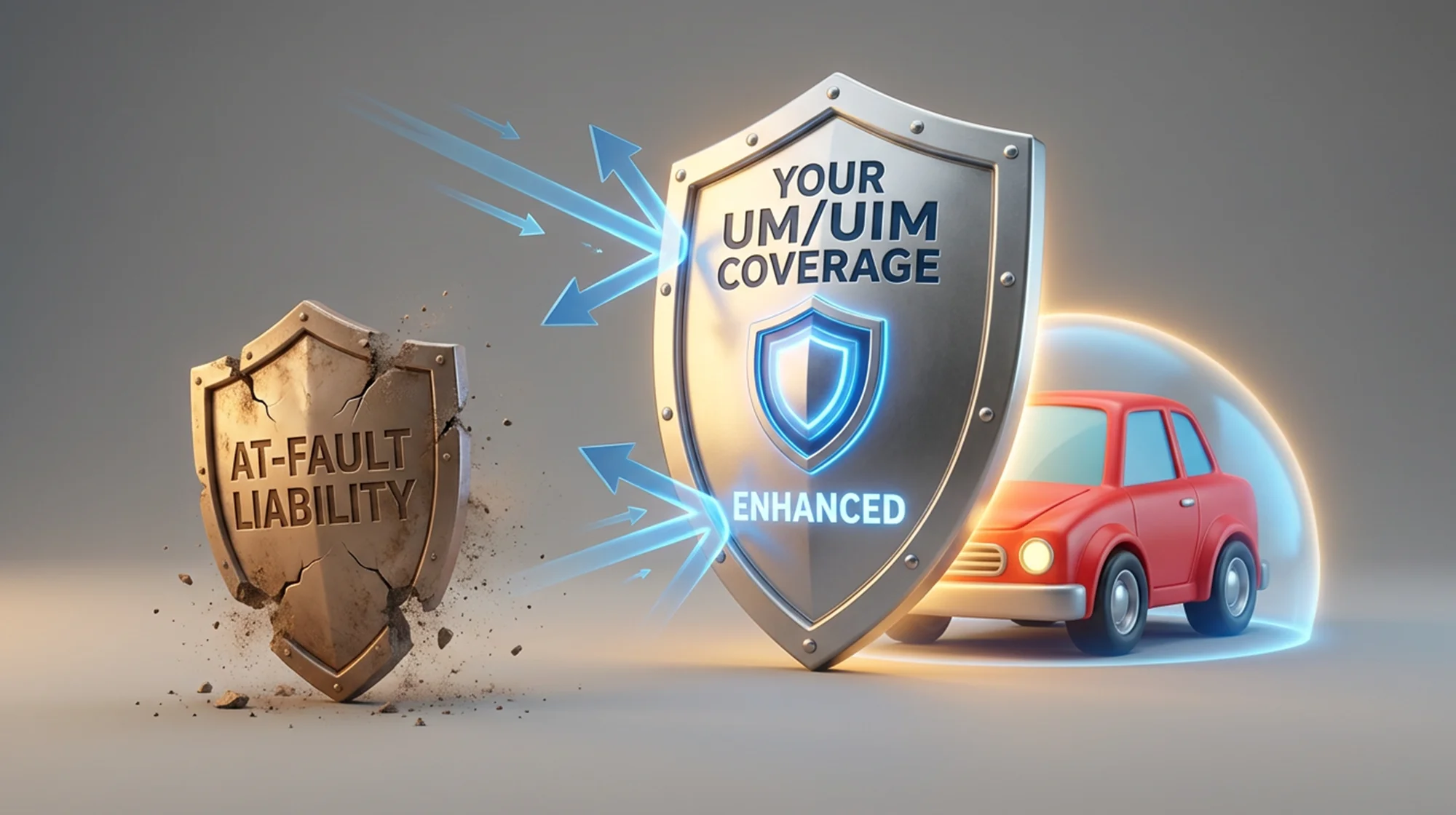
Under traditional UM/UIM coverage, the at-fault driver’s bodily injury limits reduce the amount available under your UM/UIM policy. Under Enhanced Underinsured Motorist Coverage, that offset is eliminated.
When Enhanced UIM is elected, your UM/UIM limits are available in addition to the at-fault driver’s liability limits, rather than being reduced by them.
In serious injury cases, this distinction can mean the difference between partial and adequate compensation.
Consider the following example: An at-fault driver carries $100,000 in bodily injury coverage. The injured person carries $500,000 in UM/UIM coverage.
With traditional UM/UIM, the available UM/UIM benefits will be reduced by the $100,000 liability limits.
With Enhanced Underinsured Motorist Coverage, the full UM/UIM limits will be available on top of the at-fault driver’s coverage.
Enhanced UIM can also allow stacking, depending on the policy and number of insured vehicles. In the right case, stacking can significantly increase the total coverage available. In my experience, if insureds understood how Enhanced UIM works in real-world terms, far more would elect it.
I once represented a client who suffered catastrophic injuries while working. The at-fault driver carried $250,000 in liability coverage. My client’s personal auto policy carried only state minimum limits, which were plainly insufficient given the severity of his injuries.
I immediately began investigating other potential sources of coverage. Through that investigation, I located a $1 million underinsured motorist policy provided by my client’s employer. After months of negotiation, the entire policy was tendered.
Without that additional UM/UIM coverage, my client’s recovery would have been capped far below what justice required. That case reinforced what I see repeatedly: UM/UIM coverage often determines the ceiling of a case.
After UM/UIM coverage, Personal Injury Protection (PIP) is the next most important coverage I see clients regret waiving.
PIP is no-fault coverage. It applies regardless of who caused the accident and can pay for medical treatment and/or lost wages. PIP is designed to provide immediate support after a crash, before liability claims are resolved.
Many clients waive PIP to save a small amount on their premium, not realizing:
In practice, the short-term savings rarely justify the long-term consequences.
Medical Payments coverage, or MedPay, is a separate coverage that can be carried in addition to PIP. MedPay pays medical expenses related to an auto accident regardless of fault.
While MedPay is not as critical as UM/UIM or PIP, it can be extremely helpful. MedPay can be used in addition to PIP. When used properly, it can cover treatment costs that would otherwise fall on health insurance or the injured person directly.
For clients who can afford it, MedPay adds flexibility and reduces financial pressure during recovery.
I frequently see insurers:
While these practices may comply with the law, they often leave drivers dangerously underprotected. For general consumer guidance, the Maryland Insurance Administration provides helpful information, but it does not address how these elections affect serious injury cases.
Based on what I see every day, my general recommendations are:
You do not want your financial future to depend on whether the person who injures you made responsible insurance choices.
Insurance decisions are often made quickly and with limited explanation. Unfortunately, those decisions can control the outcome of a serious injury case years later. In my practice, I have seen how proper UM/UIM coverage can change lives, and how inadequate coverage can permanently limit recovery.
If you or a loved one was injured, contact me at SG Legal Group. My team and I will help you understand your options and pursue the compensation you deserve. Call 410-618-1277 or visit our Contact page to schedule a consultation.
This article provides general information and is not legal advice. For advice about your specific situation, please contact me directly.
Joshua C. Sussex, Esq.
Stay informed with our latest articles and resources.