Accidents
A rear-end collision is one of the most common types of car accidents in Maryland. Although these crashes may initially appear straightforward, they frequently lead to serious injuries, disputed liability, and complicated insurance claims. Drivers often assume that the trailing vehicle is automatically at fault, but insurance companies regularly investigate rear-end collisions for possible defenses that could reduce or eliminate compensation.
As a personal injury attorney, I often see how quickly a seemingly simple rear-end accident can turn into a contested claim. Insurance adjusters may question how the crash occurred, whether the injured driver contributed to the accident, or whether the injuries are related to the collision. Because Maryland follows a strict contributory negligence rule, even minor allegations of shared fault can significantly affect a claim.
If you were injured in a rear-end collision in Maryland, the steps you take immediately after the crash can play a critical role in protecting your legal rights. Proper documentation, prompt medical treatment, and careful communication with insurance companies can strengthen your claim and help preserve key evidence.
This guide explains how rear-end collisions are evaluated under Maryland law, what steps to take at the accident scene, and how injured drivers can protect their right to compensation.
Rear-end collisions typically occur when a trailing driver fails to maintain a safe following distance and strikes the vehicle in front. Maryland law requires drivers to operate their vehicles with reasonable care and to maintain enough distance to stop safely if traffic slows or stops.
Because of this duty, the trailing driver is often presumed to be responsible for a rear-end crash. However, this presumption does not automatically guarantee compensation. Insurance companies frequently examine rear-end collisions for circumstances that might shift partial responsibility to the lead driver.
Maryland follows the contributory negligence doctrine, one of the strictest fault rules in the United States. Under this doctrine, if an injured person is found to have contributed even slightly to causing the accident, they may be barred from recovering damages entirely.
For example, insurers may argue that the lead driver:
Even when these arguments are weak, they may still be raised in an effort to avoid paying compensation. This is why gathering strong evidence immediately after the crash is so important.
Rear-end crashes frequently produce injuries because occupants are caught off guard by the sudden impact. When a vehicle is struck from behind, the force of the collision can cause the body to move abruptly forward and backward, placing strain on the neck, spine, and surrounding muscles.
Common injuries associated with rear-end collisions include:
Some injuries may not appear immediately after the accident. It is not uncommon for symptoms such as neck stiffness, headaches, or back pain to develop hours or even days later. Because of this delayed onset, prompt medical evaluation is extremely important.
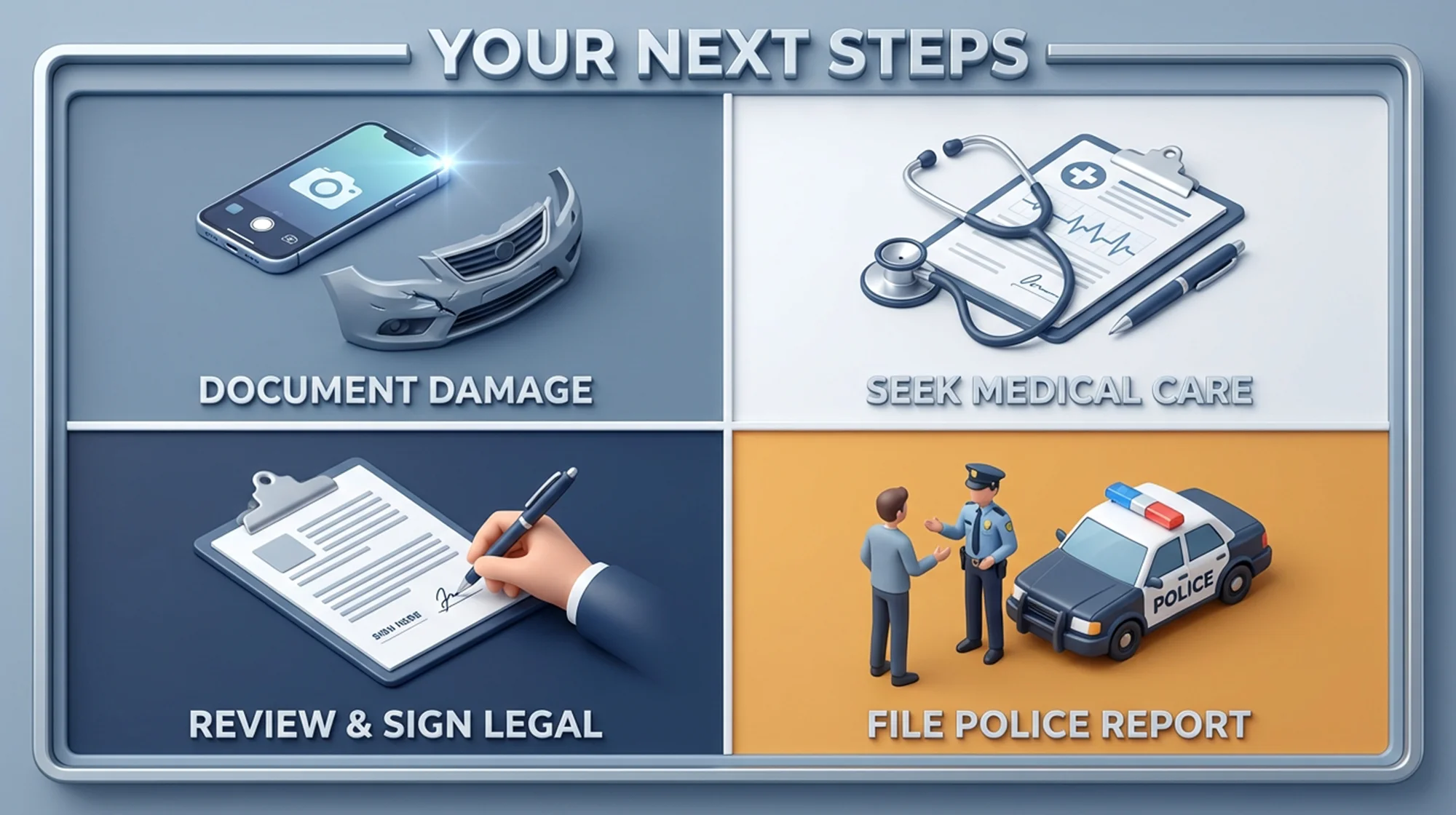
Immediately after a rear-end collision, the first priority should always be safety. Check yourself and others involved in the accident for injuries. If possible, move vehicles to a safe location to prevent additional collisions.
Call 911 to request police assistance and medical help if necessary. Having law enforcement respond to the scene can be extremely valuable for several reasons.
A police report creates an official record of the accident that may include:
This documentation can later serve as important evidence when dealing with insurance companies.
If you are physically able, gathering evidence at the scene can significantly strengthen your claim. Conditions at the accident scene can change quickly once vehicles are moved or traffic resumes, so documenting the situation as soon as possible is important.
Using a smartphone to photograph and record video can help preserve critical details.
Important documentation may include:
Photographs can help accident investigators understand how the crash occurred and may counter arguments raised by insurance companies later.
Independent witnesses can provide valuable perspectives about how the accident occurred. If other motorists or pedestrians observed the crash, try to obtain their names and contact information before leaving the scene.
Witnesses may later be able to confirm important details, such as:
Because witnesses may not remain at the scene for long, collecting this information early is important.
Even if injuries initially seem minor, seeking medical attention after a rear-end collision is highly recommended. Some injuries, particularly soft tissue injuries and concussions, may not produce immediate symptoms.
Prompt medical care serves two important purposes. First, it ensures that injuries are properly diagnosed and treated. Second, it creates medical documentation linking the injuries to the accident.
Insurance companies frequently scrutinize medical records when evaluating claims. Delays in treatment may allow insurers to argue that the injuries were not caused by the collision or were less serious than claimed.
Medical documentation that may support a claim includes:
Following your doctor’s treatment recommendations consistently can also help demonstrate the seriousness of the injury.
Most automobile insurance policies require drivers to report accidents promptly. After a rear-end collision, you should notify your insurance company that the crash occurred.
However, it is important to communicate carefully when dealing with insurance representatives. You are not required to provide a recorded statement to the other driver’s insurance company.
When speaking with insurers:
Even casual remarks can later be used by insurers to challenge a claim.
Although rear-end collisions often appear straightforward, insurance companies frequently raise defenses aimed at reducing liability.
Common defenses include:
Allegations of Sudden Stops
Insurers may argue that the lead driver stopped abruptly or without reason, leaving the trailing driver insufficient time to react.
Claims of Faulty Brake Lights
Another argument sometimes raised is that the lead vehicle’s brake lights were not functioning properly, preventing the trailing driver from recognizing that traffic was slowing.
Disputes About Impact Severity
Insurance companies sometimes claim that the collision was too minor to cause significant injury. This argument is commonly raised in low-speed rear-end crashes.
Pre-Existing Medical Conditions
Insurers may also attempt to attribute injuries to prior medical conditions rather than the accident itself.
Addressing these defenses often requires strong medical documentation and clear evidence regarding how the crash occurred.
Strong personal injury claims rely on thorough documentation. Keeping organized records of all accident-related expenses can help demonstrate the full impact of the collision.
Important documentation may include:
Maintaining a personal journal describing symptoms, pain levels, and limitations can also provide helpful insight into how the injuries affect daily life.
In some rear-end collision cases, the insurance company may dispute liability. When this occurs, additional investigation may be necessary.
Evidence that may clarify fault includes:
In certain situations, filing a lawsuit may become necessary in order to obtain evidence through formal discovery.
Litigation tools such as depositions, document requests, and expert analysis can help establish how the crash occurred.
When liability is contested, accident reconstruction experts may analyze physical evidence to determine how the collision occurred.
These experts may examine:
Their analysis can provide scientific insight into whether the trailing driver had sufficient time to avoid the collision.
When another driver’s negligence causes a rear-end collision, injured individuals may seek compensation for several types of damages.
These may include:
The value of a claim depends on many factors, including the severity of the injuries, the length of recovery, and the long-term impact on the injured person’s life.
Rear-end collisions in Maryland may appear simple, but insurance companies often investigate these accidents closely in an effort to dispute liability or minimize compensation.
At SG Legal Group, my team and I represent individuals injured in rear-end collisions throughout Maryland. We work to preserve critical evidence, analyze liability issues, and advocate for our clients throughout the claims process.
If you were hurt because another driver failed to maintain a safe following distance, early legal guidance can help protect your claim and ensure that important evidence is preserved.
If you or a loved one was injured, contact me at SG Legal Group. My team and I will help you understand your options and pursue the compensation you deserve. Call 410-618-1277 or visit our Contact page to schedule a consultation.
This article provides general information and is not legal advice. For advice about your situation, please contact me directly.
Joshua C. Sussex, Esq.
Stay informed with our latest articles and resources.