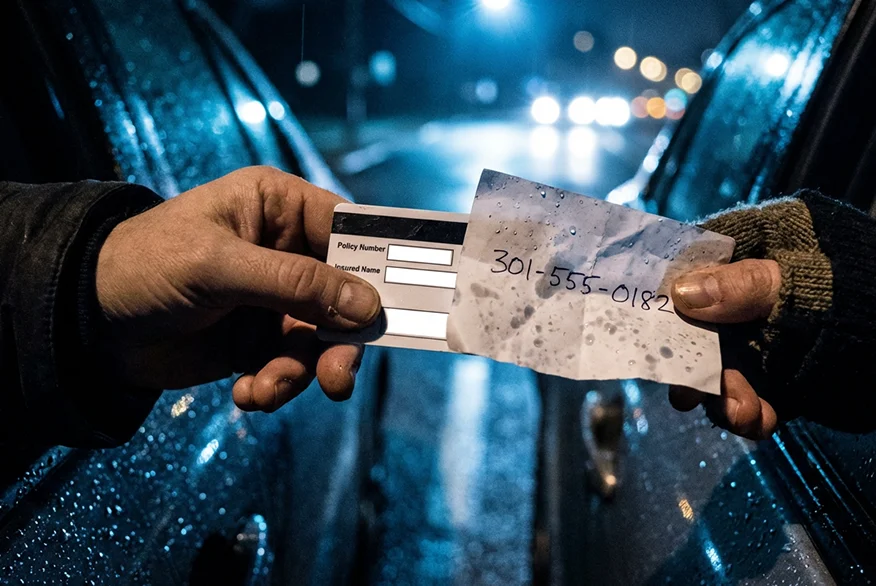
Accidents

You've been in an accident. You're hurting, the bills are stacking up, and the insurance company keeps calling. You know you should talk to a lawyer — but something is holding you back.
Maybe you're worried it'll cost money you don't have. Maybe you're not sure if your case is "big enough." Or maybe you just don't know what to expect when you walk through the door or pick up the phone.
I hear this from people every single week. And I want to be honest with you: that hesitation is one of the most expensive mistakes I see accident victims make. Not because I'm trying to pressure you into hiring anyone — but because the longer you wait to understand your rights, the harder it becomes to protect them.
So let me walk you through exactly what happens during a free accident consultation at SG Legal Group, what you should bring, and how to make sure you leave with real, actionable answers — whether you hire us or not.
Let me clear something up right away, because I know the word "free" makes people skeptical.
A free consultation means you can sit down with a licensed attorney, explain your situation, and get an honest assessment of your case — without paying a dime. There's no invoice at the end. No hidden charges. No obligation to hire the firm afterward.
At SG Legal Group, we handle personal injury and accident cases on a contingency fee basis. That means you pay nothing upfront, and we only get paid if we recover money for you. The free consultation is the starting point of that process — it's how we determine whether we can help, and it's how you determine whether you trust us to handle your case.
Think of it this way: a good consultation is a two-way interview. You're evaluating us just as much as we're evaluating your case. And that's exactly how it should be.
People often imagine a consultation as something formal and intimidating. In my experience, it's the opposite. It's a conversation. Here's how it typically goes.
I'll Ask You to Tell Me What Happened
This is always the starting point. I want to hear your version of events — in your own words, at your own pace. I'm not looking for a perfect, polished story. I'm listening for the details that matter legally: where the accident happened, what the other driver did, whether police responded, and what your injuries have been like.
You don't need to have everything memorized. If you've got a police report or some photos from the scene, that's great. If you don't, that's fine too. The point of this conversation is for me to understand the basics of what you're dealing with.
I'll Ask About Your Injuries and Medical Treatment
This part matters more than most people realize. In a personal injury case, the connection between the accident and your injuries is everything. So I'll want to know what kind of medical treatment you've received, whether you've been to the emergency room, whether you're doing physical therapy, and whether your doctor has said anything about long-term effects.
One thing I always tell clients: if you've been putting off medical treatment because you're worried about costs or you think the pain will go away on its own, mention that. It's more common than you'd think, and it's something we can work through — but only if I know about it.
I'll Explain What I Think About Your Case — Honestly
Here's where the real value of a consultation shows up. After hearing your story, I'll give you my honest assessment. That might sound like, "You've got a strong case, and here's why." It might also sound like, "Based on what you've told me, this would be a difficult claim to pursue, and here's the reason."
Not every accident leads to a viable legal claim. That's just the reality. But what I can promise is that I won't string you along or give you false hope just to sign you up. If I don't think you have a case, I'll tell you directly — and I'll explain why, so you can make informed decisions regardless.
If you do have a case, I'll walk you through the general process: what a claim looks like, how insurance negotiations typically work, what kind of timeline to expect, and what compensation might be realistic based on what I've seen in similar situations.
I'll Answer Your Questions
This is your time. You can ask me anything — about your case, about how we work, about fees, about timelines, about what happens if the insurance company calls you tomorrow. Nothing is off limits.
The people who get the most out of a consultation are the ones who come in with questions. More on that in a moment.
You don't need a perfectly organized file folder. But the more information you can bring, the better assessment I can give you. Here's what helps:
The police report or crash report, if you have a copy. This gives me the basic facts — who was involved, what the officer documented, and whether any citations were issued.
Photos from the accident scene. Damage to your vehicle, the road conditions, traffic signals, your visible injuries — anything you snapped in the moment can be valuable.
Medical records and bills. Even if you just have discharge papers from the ER or a printed summary from your doctor, bring them. If you've been to physical therapy, bring those records too.
Insurance information. Your own policy, any correspondence from the other driver's insurance company, and any letters, emails, or voicemails you've received from adjusters.
A written timeline. This doesn't need to be fancy. Even a few notes on your phone about what happened, when you went to the doctor, and when the insurance company contacted you can help me piece together the full picture.
If you don't have any of this, come anyway. I'd rather talk to you with no documents than have you put off the conversation because you think you're not "ready enough." We can track down records and reports together once we know where things stand.
A consultation isn't just about the attorney interviewing you — it's your chance to evaluate whether this is the right lawyer and the right firm for your case. Here are questions I'd encourage you to ask any attorney you're considering:
"Have you handled cases like mine before?" Experience with your specific type of accident matters. A lawyer who handles car accidents regularly will approach your case differently than a general practice attorney who takes on one or two a year.
"What do you think my case is worth?" A good attorney won't give you a specific dollar figure in the first meeting — there are too many variables at play. But they should be able to explain the factors that affect compensation and give you a realistic range based on their experience.
"How do your fees work?" You should understand the fee structure before you sign anything. As I mentioned, our firm works on contingency — no win, no fee. But ask about costs, too. Some firms charge clients for things like filing fees or medical record requests even if the case doesn't settle. At SG Legal Group, you don't pay attorney's fees unless we win.
"Who will actually be working on my case?" At some larger firms, you meet with a senior attorney during the consultation and then never hear from them again — your case gets handed off to a paralegal or junior associate. Ask who your point of contact will be and how often you can expect updates.
"What's the timeline?" Every case is different, but a good attorney can give you a general idea of how long the process takes based on your injuries, the insurance company involved, and whether litigation might be necessary.
After years of doing this, I've noticed a few worries that come up again and again. Let me address them directly.
"My accident wasn't that bad."
There's no minimum threshold for reaching out. I've seen cases where someone thought their fender bender was "minor" and later discovered they had a herniated disc that required surgery. The severity of vehicle damage doesn't always reflect the severity of injuries. It's always worth having a conversation.
"I'm not sure if it was the other driver's fault."
That's one of the things a consultation helps you figure out. Maryland follows a rule called contributory negligence, which means fault matters a great deal. But determining fault isn't always as straightforward as it seems at the scene. There are often details in the police report, traffic camera footage, or witness statements that paint a clearer picture.
"The insurance company already offered me money."
This is actually one of the most important reasons to talk to a lawyer before you accept anything. Insurance adjusters are trained to close claims quickly and for as little as possible. I've seen clients come to me after being offered $3,000 for injuries that ultimately required $40,000 in medical treatment. Once you sign a release, you almost always can't go back. A quick conversation with an attorney can help you understand whether that offer is fair — or whether you're leaving significant money on the table.
"I can't afford a lawyer."
You can't afford not to have one — and I mean that without a trace of sales pitch. Personal injury attorneys who work on contingency take on the financial risk of your case. You don't pay unless we recover compensation for you. The consultation is free, the representation costs nothing upfront, and studies consistently show that injury victims represented by attorneys recover significantly more than those who negotiate alone — even after attorney fees.
I don't bring this up to pressure anyone. But Maryland has a statute of limitations for personal injury claims — generally three years from the date of the accident. That might sound like a long time, but evidence disappears, witnesses forget details, and medical records become harder to connect to the accident the longer you wait.
More immediately, if you've been contacted by the other driver's insurance company, anything you say to them can and will be used to minimize your claim. Having a lawyer involved early means those conversations go through someone who knows how to handle them.
The best time to schedule a consultation is as soon as possible after the accident. But if weeks or months have passed, don't let that stop you from calling. It's not too late until the statute of limitations runs out.
If we both agree it makes sense to move forward, the process is straightforward. You'll sign a representation agreement, and from that point on, I handle communication with the insurance companies, gather evidence, coordinate with your medical providers, and build the strongest possible case for your compensation.
If you decide you're not ready, or if you want to think it over, there's absolutely no pressure. The consultation is yours. You walk away with a better understanding of your rights and your options — and that has value regardless of what you decide.
If you've been in an accident in Maryland and you're wondering whether you have a case, I'd encourage you to take the first step. A phone call or a short meeting can give you clarity you won't get from searching the internet or trying to negotiate with an insurance company on your own.
Contact me directly or call 410-344-7100 to schedule a free, no-obligation consultation. I'll give you an honest assessment, answer every question you have, and help you understand exactly where you stand. That's what the consultation is for — and it won't cost you anything.

Disclaimer: The information provided in this article is for general informational purposes only and does not constitute legal advice. Laws and regulations are subject to change, and individual circumstances vary. For advice specific to your situation, please consult with a qualified attorney.
Joshua C. Sussex, Esq.
Stay informed with our latest articles and resources.