Immigration Law
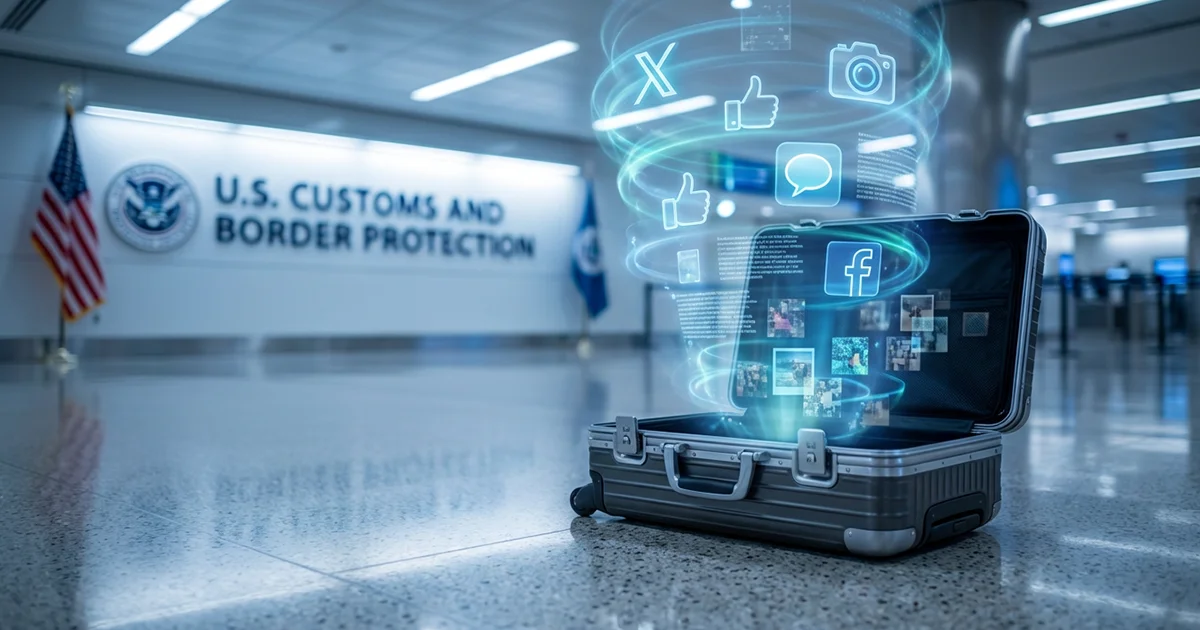
The United States is considering major changes to the Electronic System for Travel Authorization (ESTA), including a new requirement that applicants disclose up to five years of social media history before entering the country. Under a recent U.S. Customs and Border Protection (CBP) proposal, visitors from Visa Waiver Program (VWP) countries—such as the U.K., France, Germany, Israel, Japan, Australia, and South Korea—would need to submit significantly more personal data as part of the screening process.
These proposed rules signal a shift toward deeper digital vetting. Travelers, families, and businesses relying on visa-free travel should understand what information may soon be required and how this could affect their ability to enter the United States.
Watch The Video Overview
CBP proposes adding social media identifiers as a mandatory data element for all ESTA applicants. In addition, travelers may need to disclose:
This would create one of the most expansive pre-travel vetting systems ever applied to visa-free visitors.
The Visa Waiver Program includes dozens of countries across Europe and the Asia-Pacific region. More than 14 million travelers use ESTA each year, and all would be subject to the expanded requirements if finalized.
Immigration advocates warn that mandatory disclosure of years of online activity could discourage travel and encourage self-censorship. Farshad Owji, past president of the American Immigration Lawyers Association, noted that applicants may feel compelled to alter their social media presence out of fear it could be misinterpreted.
Because social media often reflects political, religious, and personal expression, widescale digital screening raises questions about privacy and the appropriate scope of CBP review.
Another proposed change would eliminate the option to apply on the government website. Instead, all applicants would be required to use the ESTA Mobile App, which CBP estimates will process more than 14 million applications annually.
While these changes are new for ESTA, social media disclosure has been part of U.S. immigration law since 2019. All immigrant and non-immigrant visa applicants must already list their social media accounts. Recent updates also require:
These developments show that digital vetting is becoming standard across categories.
If implemented, the new rules may lead to:
The basic ESTA framework continues unchanged:
These expanded rules are not yet in effect. CBP has opened a 60-day public comment period before deciding whether to finalize or revise the proposal.
The proposed ESTA social media requirements represent a significant expansion of pre-travel screening for visitors from Visa Waiver Program countries. If adopted, applicants will need to disclose far more personal and digital information—social media accounts, contact history, biometrics, and family data—before traveling to the United States.
As these changes develop, travelers should stay informed and ensure that all information submitted to CBP is accurate and consistent.
If you need guidance navigating U.S. immigration law contact me at SG Legal Group. My team and I will help you move forward with clarity and confidence. Consultations are available in English, Russian, or Romanian. Call 410-618-1288 or visit our Contact page to schedule a consultation.
Oleg Gherasimov, Esq.
Stay informed with our latest updates.