Personal Injury
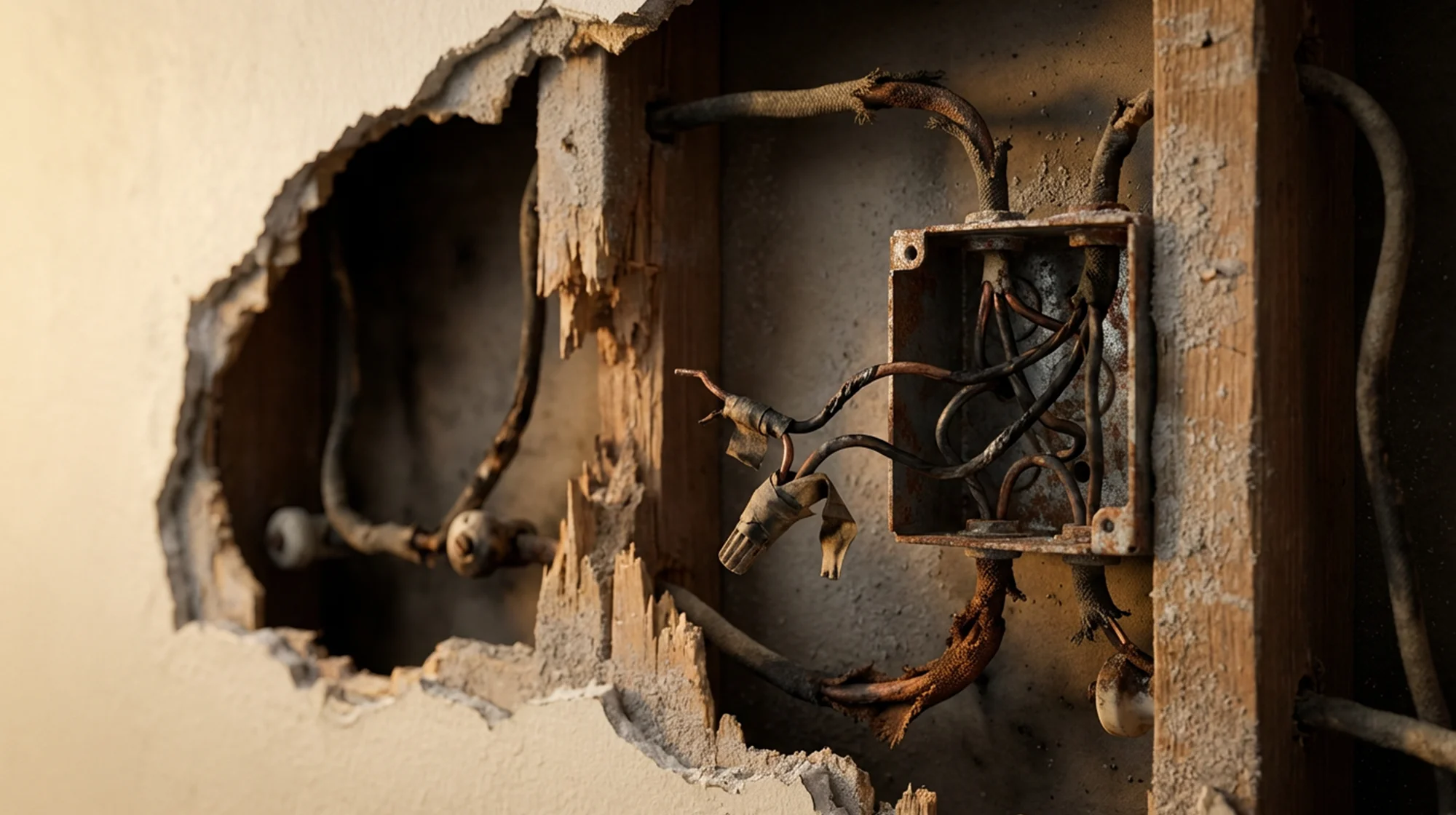
A fire in your apartment or rental home can destroy everything you own in minutes. But the damage doesn't stop when the flames go out. Burn injuries require months or years of treatment. Smoke inhalation can cause lasting respiratory problems. And the emotional toll of losing your home, your belongings, and your sense of safety is something most people don't fully grasp until it happens to them.
Here's what too many Maryland tenants don't realize: if your landlord's negligence caused or contributed to that fire — or made it worse than it should have been — you may have a legal claim for every dollar of damage you've suffered.
I'm Joshua Sussex, a personal injury attorney at SG Legal Group. I've spent my career representing people who've been hurt because someone else failed to meet their legal obligations. And landlord negligence cases — where a property owner cuts corners on safety and a tenant pays the price — are among the most preventable tragedies I see.
Let me walk you through exactly when a landlord is responsible for a fire under Maryland law, what your rights are, and what you can do about it.
Before we get into the law, let's talk about what's actually happening in Maryland.
In 2024, there were 73 fire-related deaths across 67 fatal fires statewide. Baltimore City alone accounted for 19 of those deaths — more than any other jurisdiction. Baltimore County followed with 13. The vast majority of these fatalities — 79% — occurred in residential properties. That means homes, apartments, and rental units.
Here's the number that should concern every renter in Maryland: of those 67 fatal fires, only 20 had confirmed working smoke alarms. Nine had no smoke alarms at all. Six had alarms that weren't functioning.
That means in roughly two-thirds of fatal fires, the smoke detection system — the single most important piece of fire safety equipment in any home — either wasn't there or wasn't working.
And nationally, the numbers are just as sobering. The NFPA reported approximately 329,500 home structure fires in 2024, causing 2,920 civilian deaths, 8,920 injuries, and $11.4 billion in property damage. A home fire is reported roughly every 96 seconds in this country.
These aren't just statistics. They represent real people — many of them renters — whose landlords had a legal obligation to keep their homes safe from fire hazards.
Maryland law holds landlords accountable for fire injuries through several overlapping legal theories. Understanding how they work together is important, because a strong claim often relies on more than one.
Every landlord negligence case starts with the same basic question: did the landlord breach a duty of care owed to the tenant, and did that breach cause harm?
Under Maryland premises liability law, a landlord is liable when four elements are met. First, the landlord had control over the dangerous condition. Second, the landlord knew or should have known about it. Third, the harm was reasonably foreseeable. And fourth, the condition actually caused the tenant's injuries.
Maryland courts apply what's known as the Matthews v. Amberwood balancing test to determine a landlord's duty. The court weighs the landlord's degree of control over the dangerous condition, how foreseeable the harm was, and the landlord's ability to fix it. While that case involved a different type of hazard, the same balancing test applies across all landlord liability scenarios — including fires.
There's a common misconception that once a landlord hands over the keys, they're off the hook for what happens inside the unit. That's not how Maryland law works. Landlords remain responsible for conditions they control — like the electrical system, the heating equipment, the smoke detection system, and the structural integrity of the building. They're also responsible for all common areas: hallways, stairwells, exits, and shared spaces.
One Maryland appellate decision is especially important for anyone considering a fire liability claim against a landlord.
In Rivers v. Hagner Management Corp., a tenant named Lester Rivers was injured while fleeing a fire in his apartment building. The fire was actually set by an arsonist — a serial arsonist, in fact. The landlord argued that because a criminal third party started the fire, the landlord couldn't be held responsible.
The Court of Special Appeals disagreed. The court found that the landlord had fire code violations, and those violations contributed to the tenant's injuries during the escape. The court's reasoning was clear: it doesn't matter what started the fire. What matters is whether the landlord's failure to comply with fire safety codes contributed to the injuries the tenant suffered.
That's a powerful principle. Even when the fire itself isn't the landlord's fault — even when it's arson — a landlord who has violated fire codes can still be held liable for the injuries tenants sustain because those violations made the building more dangerous than it should have been.
When a landlord violates a specific safety statute — like Maryland's smoke detector law — courts can apply a doctrine called negligence per se. This means the court can establish that the landlord breached their duty as a matter of law, without requiring the tenant to prove what a "reasonable" landlord would have done.
For negligence per se to apply, two things must be true: the injured tenant must be within the class of people the statute was designed to protect, and the injury must be the type the statute was designed to prevent. Tenants injured in fires where the landlord violated smoke detector or fire safety requirements fit squarely within both categories.
This is a significant advantage in fire cases. Instead of arguing about what the landlord "should have" done, you can point to the statute and say: the law required X, the landlord didn't do X, and that failure contributed to my injuries. That's a much stronger legal position.
Maryland has detailed smoke alarm requirements under Public Safety §9-102 and §9-106 that place clear obligations on landlords. Many landlords either don't know these rules or choose to ignore them.
Under §9-102, every residential unit must have an automatic smoke alarm in each sleeping area. The type of alarm required depends on when the building was constructed. Buildings constructed after July 1, 1990 must have AC-powered smoke alarms with battery backup. Multifamily buildings like apartment complexes require AC-powered alarms regardless of construction date. If a building requires two or more alarms, activating one must trigger all alarms within the unit.
Alarms must also be upgraded when existing alarms are older than 10 years, when alarms fail testing, when there's a change of tenant, or when a building permit is issued for alterations.
Here's the part that matters most for tenants: under §9-106, the landlord — not the tenant — is responsible for installing, repairing, maintaining, and replacing smoke alarms. If a tenant notifies the landlord in writing that an alarm isn't working, the landlord has just five calendar days to repair or replace it. That notification must be in writing — either by certified mail or hand delivery.
The tenant's only obligation is to test the alarm periodically and to notify the landlord of any malfunction. Tenants may not remove or tamper with alarms.
Landlords who violate these requirements face criminal penalties: fines up to $1,000 or imprisonment up to 10 days, or both. Each day a violation continues after the landlord has knowledge or receives official notice counts as a separate offense.
Given that working smoke alarms reduce fire death risk by approximately 60%, a landlord who fails to maintain functioning alarms isn't just breaking the law — they're dramatically increasing the likelihood that a fire in their building will be fatal.
Beyond smoke detector requirements, Maryland's Real Property Code imposes a broader obligation on landlords through the implied warranty of habitability.
Under §8-211, landlords must repair and eliminate conditions that constitute — or if not promptly corrected, will constitute — a fire hazard or a serious and substantial threat to the life, health, or safety of occupants. This isn't optional. The Maryland legislature explicitly declared it is the public policy of the state that meaningful sanctions be imposed on landlords who allow dangerous conditions to persist.
Under §8-212, the warranty of fitness for human habitation exists at the beginning of the tenancy and continues throughout. A dwelling that has unaddressed fire hazards — exposed wiring, a malfunctioning furnace, blocked fire exits, or broken fire safety equipment — is not fit for human habitation under Maryland law.
If a tenant provides written notice of a dangerous condition and the landlord fails to address it within a reasonable time — and a period exceeding 30 days is presumptively unreasonable — the tenant has legal remedies available. These include a rent escrow action, where the tenant deposits rent with the court rather than paying the landlord, and a direct action for damages and rent abatement.
But if a fire occurs before those remedies can be pursued, the landlord's failure to address the fire hazard becomes powerful evidence of negligence in a personal injury or wrongful death claim.
Not every rental property fire is a landlord's fault. But many are — and even more are made far worse by conditions the landlord could have prevented. These are the scenarios I see most often.
Faulty or Outdated Electrical Wiring
This is the big one. Electrical malfunctions are responsible for a disproportionate share of fire fatalities — causing roughly 6% of residential fires but 11% of fire deaths. In Maryland, seven of the 67 fatal fires in 2024 were electrical in origin.
Older buildings with ungrounded wiring, degraded insulation, aluminum wiring (common in 1960s-70s construction), or overloaded circuits present serious fire risks. When a landlord knows or should know that the electrical system is outdated or dangerous and fails to bring it up to code, that's negligence.
Failure to Maintain Heating Equipment
Heating equipment is the second leading cause of home fires nationally. Malfunctioning furnaces, boilers, and HVAC systems that haven't been properly serviced can overheat, spark, or leak gas. Portable space heaters — sometimes provided by landlords as substitutes for broken central heating — account for a small percentage of heating fires but a staggering 41% of heating fire deaths.
Missing or Non-Functional Smoke Detectors
I've already covered the legal requirements in detail. The practical reality is stark: when smoke alarms don't work, people die. The fire death rate in homes without working alarms is more than double the rate in homes with functioning alarms. Of alarms that failed to operate during fires, 43% had missing or disconnected batteries.
Blocked Fire Exits and Egress Routes
Obstructed stairways, locked fire doors, missing fire escape ladders, and cluttered hallways can turn a survivable fire into a fatal one. Landlords are responsible for maintaining clear and functional egress routes, especially in common areas of multi-unit buildings.
Ignoring Tenant Complaints
When a tenant reports sparking outlets, a gas smell, a non-functioning smoke alarm, or any other fire hazard — and the landlord does nothing — that creates a documented trail of notice. Notice is critical in negligence cases because it eliminates any argument that the landlord didn't know about the danger.
Unlicensed or Improper Repairs
Landlords who perform their own electrical work — or hire unqualified workers to save money — put tenants at serious risk. Improperly wired outlets, overloaded panels, and code-noncompliant installations are ticking time bombs.
This is the single most important thing any Maryland tenant needs to understand before pursuing a fire liability claim, and it's something almost no one talks about in the context of fire cases.
Maryland follows the doctrine of pure contributory negligence. Under this rule, if a tenant is found to be even 1% at fault for their own injuries, they are completely barred from recovering any compensation — no matter how negligent the landlord was.
Maryland is one of only five jurisdictions in the entire country that still follows this rule. Most states use comparative negligence, which reduces your recovery by your percentage of fault. Maryland's rule is all-or-nothing.
In a fire case, this means the landlord's defense team will look for any evidence that the tenant contributed to the fire or to their own injuries. Did the tenant leave a stove unattended? Were they smoking inside? Did they fail to test the smoke alarms? Did they remove batteries? Did they fail to report a hazardous condition in writing? Did they delay evacuation?
Any of these facts could potentially be used to argue contributory negligence and destroy an otherwise strong claim.
This is why documentation matters so much. If you reported a fire hazard and the landlord ignored it, that written record is your shield. If the landlord's own code violations caused or worsened the fire, negligence per se can significantly reduce the effectiveness of a contributory negligence defense. And if the landlord had a final opportunity to prevent the harm — even after the tenant's own negligence — the last clear chance doctrine may allow recovery despite the tenant's partial fault.
This is also why having an experienced attorney matters. Navigating contributory negligence in a fire case requires careful investigation, strategic evidence preservation, and a thorough understanding of how Maryland courts analyze fault. It's not something you want to handle on your own.
In addition to the statewide requirements, many Maryland jurisdictions impose their own fire safety standards on landlords through local housing codes and rental licensing programs.
Baltimore City requires all non-owner-occupied dwellings to have a rental registration and license through the Department of Housing and Community Development. Since January 2019, landlords must have a valid license to collect rent, and obtaining that license requires passing an inspection that covers smoke and carbon monoxide detectors, electrical systems, and plumbing. The city's Strengthening Renters' Safety Act has increased inspections for problem buildings with 20 or more units.
Baltimore County has its own rental licensing program for buildings with six or fewer units. Landlords must install direct-wired smoke detectors in each unit, and in pre-1976 buildings, those detectors must also have battery backup. Every three years, the landlord must submit written verification from a licensed electrician that smoke detectors are properly installed and operational.
Montgomery County requires a license from the Department of Housing and Community Affairs before any residential rental can be rented or even advertised. The property must comply with all fire, safety, building, and zoning codes before the license will be issued. Operating without a license triggers a $500 civil citation, and landlords who receive a Notice of Violation must correct problems within 10 days.
Prince George's County has a similar rental licensing program with its own fire safety compliance requirements.
Violations of any of these local codes can serve as additional evidence of negligence — and potentially support a negligence per se argument — in a fire liability case.
The damages in a fire case can be substantial, particularly when burn injuries are involved. The average cost of treating a moderate burn without complications exceeds $200,000. Severe burns covering 40–60% of the body can result in hospital stays averaging 54 days and treatment costs approaching $780,000.
Economic Damages
Economic damages have no cap in Maryland. These include all of your past and future medical expenses for burn treatment, smoke inhalation, respiratory injuries, and any other fire-related conditions. They include lost wages from time missed at work and any reduction in your future earning capacity. They cover the cost of replacing destroyed personal property — furniture, clothing, electronics, documents, irreplaceable personal items. They include displacement costs like temporary housing, moving expenses, and storage. And in wrongful death cases, they include funeral and burial expenses.
Noneconomic Damages
Noneconomic damages — which cover pain and suffering, emotional distress, disfigurement, and loss of enjoyment of life — are subject to a statutory cap in Maryland. For injuries occurring between October 1, 2025 and September 30, 2026, that cap is $965,000. The cap increases by $15,000 each year on October 1.
In wrongful death cases with two or more beneficiaries, the cap increases to 150% of the base amount — approximately $1,447,500 for the current period.
Punitive Damages
In cases involving especially egregious, reckless, or willful landlord conduct, punitive damages may also be available. There is no statutory cap on punitive damages in Maryland. A landlord who knowingly ignored serious fire hazards, repeatedly violated fire codes, or demonstrated a callous disregard for tenant safety could face punitive damages on top of compensatory damages.
Under Maryland's statute of limitations (Courts & Judicial Proceedings §5-101), you generally have three years from the date of injury to file a personal injury lawsuit. For wrongful death claims, the three-year period runs from the date of death, not the date of the fire — an important distinction when a fire victim survives for some period before passing away.
There are limited exceptions. If the injured person is a minor, the statute is tolled until they turn 18. If the full extent of injuries wasn't immediately apparent — which can happen with smoke inhalation or chemical exposure — the discovery rule may extend the deadline. And if you're filing a claim against a government entity, such as a fire in public housing, you must provide written notice within one year under the Maryland Tort Claims Act.
Three years may sound like a long time, but evidence in fire cases degrades quickly. Fire scenes are cleaned up. Buildings are repaired or demolished. Witnesses move away. Inspection records disappear. The sooner you begin the process, the stronger your case will be.
If you or someone you love has been hurt in a fire at a rental property, there are steps you can take right now to protect yourself and your legal rights.
Get medical attention immediately, even if you feel fine. Smoke inhalation symptoms can be delayed by hours or even days. Make sure every visit, diagnosis, and treatment is documented.
Report the fire to your local fire department if you haven't already. The fire marshal's investigation report can be invaluable evidence of what caused the fire and whether code violations existed.
Document everything. Take photos and video of the damage. Write down what happened while it's fresh in your memory. Note the date, time, and what you observed about smoke alarms, exits, and any hazardous conditions you'd previously reported.
Preserve any written communications with your landlord — emails, texts, letters, maintenance requests — especially anything related to fire safety, electrical problems, heating issues, or smoke detectors. If you previously reported a hazard in writing and the landlord ignored it, that documentation is critical.
Do not sign anything from the landlord, the property management company, or an insurance adjuster without consulting an attorney first. Early settlement offers are almost always designed to close the matter quickly and cheaply — long before the full extent of your injuries and losses is known.
And contact an attorney who handles premises liability and personal injury cases in Maryland. The legal issues in landlord fire cases — from contributory negligence to code violations to damages calculations — are too complex and the stakes are too high to navigate alone.
Every landlord in Maryland has a legal duty to maintain a property that is free from fire hazards. When they cut corners — by ignoring faulty wiring, skipping smoke detector maintenance, blocking fire exits, or failing to address known dangers — they put their tenants' lives at risk.
If you've been injured in a fire caused by your landlord's negligence, you shouldn't have to bear the financial burden of their failure. Medical bills, lost income, destroyed belongings, displacement — none of that is your responsibility when someone else's negligence is to blame.
I offer free consultations to fire injury victims across Maryland. Every case is different, and I want to understand yours. Contact SG Legal Group today to discuss your situation. There's no obligation, and there's no fee unless we recover compensation for you.
Disclaimer: The information provided in this article is for general informational purposes only and does not constitute legal advice. Laws and regulations are subject to change, and individual circumstances vary. For advice specific to your situation, please consult with a qualified attorney.
Joshua C. Sussex, Esq.
Stay informed with our latest articles and resources.