Personal Injury
Learn how OSHA and MOSH violations affect Maryland workers’ compensation claims and your right to benefits after a workplace injury.
If you were hurt on the job, you may be asking: What is OSHA? More importantly, you may be wondering whether a safety violation affects your Maryland workers’ compensation claim. As a Maryland workers’ compensation attorney, I regularly see serious workplace injuries tied to failures in safety compliance. Understanding how OSHA and Maryland’s state equivalent, MOSH, intersect with your rights can significantly impact the value and direction of your case.
In this article, I explain what OSHA is, why OSHA is important in workers’ compensation cases, how to know if OSHA applies in your case, the most frequent OSHA violations lawyers see in workers’ compensation cases, and what your rights are when OSHA violations are involved.
Watch The Video Overview
The Occupational Safety and Health Administration (OSHA) is a federal agency within the U.S. Department of Labor. OSHA establishes and enforces workplace safety standards to protect employees from hazardous conditions.
In Maryland, OSHA operates through a state-approved program called MOSH (Maryland Occupational Safety and Health). MOSH regulations are found in COMAR 9.12 (Title 9, Subtitle 12 of the Code of Maryland Regulations). Maryland employers must comply with MOSH safety standards just as they would comply with federal OSHA standards.
OSHA and MOSH do not directly award compensation to injured workers. Instead, they regulate employer conduct, investigate workplace incidents, and issue citations and penalties when safety standards are violated.
That distinction is critical. OSHA enforces safety rules. Workers’ compensation provides wage replacement and medical benefits after a work injury. However, the two systems often intersect in meaningful ways.
Many injured workers do not understand why OSHA is important in workers’ compensation cases. I routinely explain that while workers’ compensation is generally a “no-fault” system, evidence of an OSHA or MOSH violation can still matter in several ways.
First, an OSHA citation can significantly strengthen a related third-party claim. For example, if a subcontractor, equipment manufacturer, or property owner contributed to the unsafe condition, an OSHA violation can help establish negligence outside the workers’ compensation system.
Second, OSHA findings often influence case value. When a formal citation confirms that safety rules were violated—such as lack of fall protection or failure to provide proper PPE—it reinforces the seriousness of the employer’s safety failures. That context can materially affect negotiations in both workers’ compensation and third-party litigation.
Third, OSHA investigations often uncover documentation. Safety logs, training records, inspection reports, and written safety policies may reveal gaps in compliance. That documentation can become powerful evidence.
In my practice, when an OSHA citation exists, it frequently impacts both the posture and value of the claim. It shifts the narrative from “an unfortunate accident” to “a preventable safety failure.”
A common question I hear is: “How do I know if OSHA applies in my case?”
When a client raises this issue, I immediately ask detailed questions about the employer:
Most private-sector employers in Maryland are subject to MOSH under COMAR 9.12. However, certain small employers and specific industries may have different regulatory structures. That is why I conduct a thorough review of the employer’s size, nature of operations, and required safety protocols.
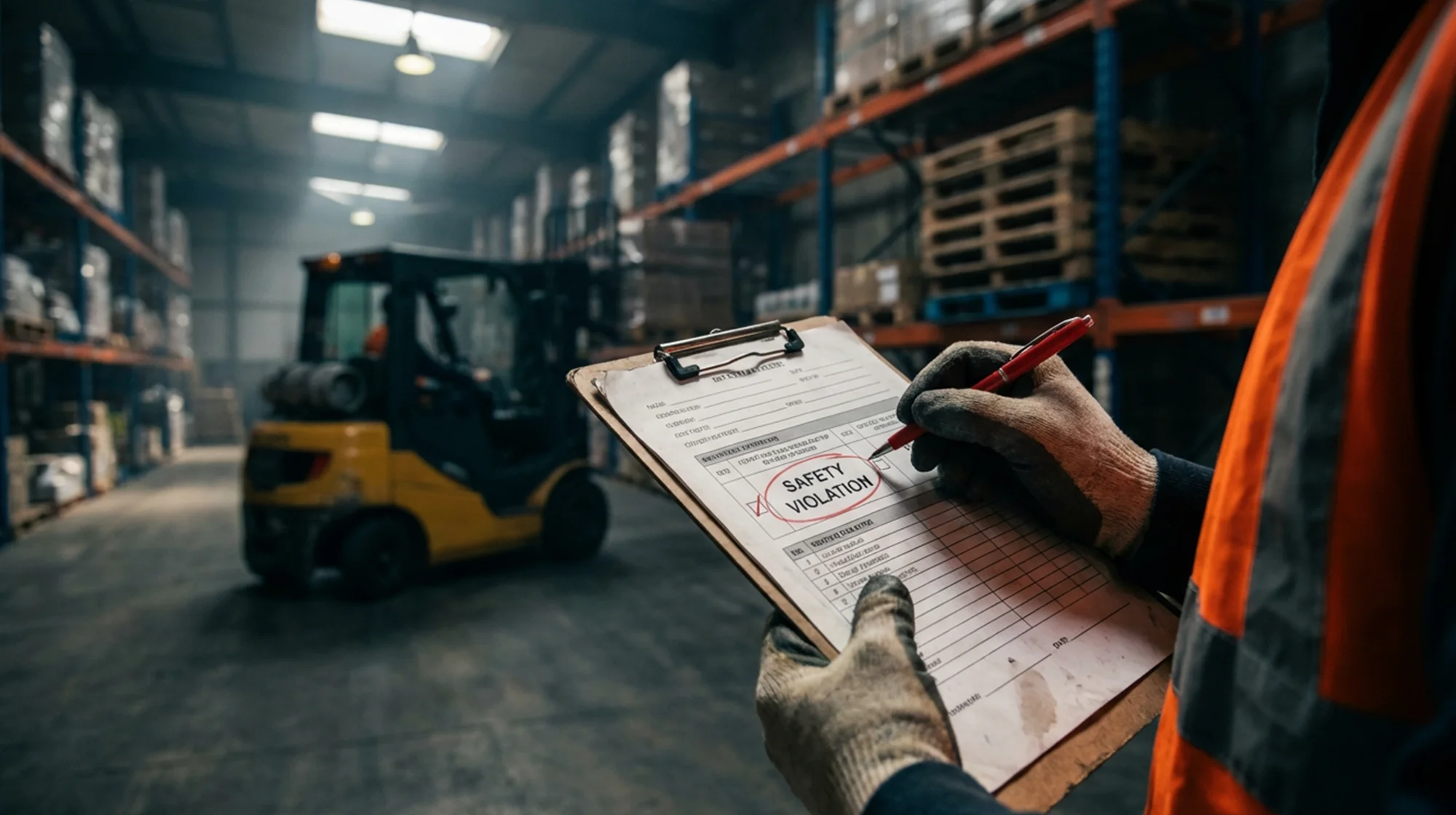
Then I research how that specific employer should have incorporated MOSH standards into its standard operating procedures. For example, construction companies must follow detailed fall protection regulations. Warehouses operating forklifts must comply with powered industrial truck standards. Healthcare facilities must comply with bloodborne pathogen and PPE rules.
If your injury involves a regulated hazard—such as heights, machinery, forklifts, or hazardous materials—there is a strong likelihood that OSHA or MOSH standards apply.
Over the years, I have consistently seen several recurring OSHA-related issues in Maryland workplace injury cases.
1. Lack of Proper Personal Protective Equipment (PPE)
Failure to provide or enforce proper PPE is one of the most common safety violations. This includes:
When an employer fails to provide or enforce PPE policies required under COMAR 9.12, injuries often follow.
2. Fall Protection Violations
Falls are among the leading causes of workplace injuries. In construction and industrial settings, fall protection standards are strict. Yet I regularly see cases involving:
When fall protection systems are not properly implemented, serious spinal injuries, traumatic brain injuries, and fractures frequently result.
3. Forklift Safety Failures
Forklift safety is another recurring issue. OSHA and MOSH require proper certification, training, and operational protocols for powered industrial trucks.
Common problems include:
Injuries often occur when an untrained co-employee operates a forklift unsafely. In many of my cases, inadequate training is the root cause.
4. Lack of Training and Supervision
Beyond equipment-specific violations, I frequently see a broader failure: inadequate training of employees. Employers are required to train workers in hazard recognition and safe operation of equipment.
When co-employees operate machinery or devices without proper instruction, it creates foreseeable danger. In these cases, I examine whether the employer complied with MOSH training requirements and whether written safety protocols were actually implemented.
Here is what you need to know.
1. You Have the Right to Workers’ Compensation Benefits
Regardless of fault, if you were injured in the course and scope of employment in Maryland, you are generally entitled to:
Even if your employer violated OSHA standards, your primary remedy against your employer remains workers’ compensation.
2. You Have the Right to File an OSHA Complaint
If you believe safety violations exist, you have the right to file a complaint with MOSH. Importantly, federal and Maryland law prohibit employer retaliation for reporting safety violations.
3. You May Have a Third-Party Claim
If a contractor, equipment manufacturer, or another entity contributed to the unsafe condition, you may have a third-party negligence claim in addition to your workers’ compensation claim. This is often where OSHA citations become especially valuable.
4. You Have the Right to Legal Representation
Workers’ compensation proceedings before the Maryland Workers’ Compensation Commission can become complex, especially when OSHA violations are involved. Evidence, expert testimony, and regulatory interpretation may all come into play.
I routinely advise injured workers to seek legal guidance early to avoid missed deadlines and to ensure that all available avenues of recovery are explored.
It is important to understand that OSHA does not automatically increase your workers’ compensation benefits. Maryland’s workers’ compensation system operates independently of fault findings.
However, OSHA violations can:
In serious injury cases, these factors matter.
When I evaluate a case involving a potential OSHA issue, I do not stop at the injury itself. I examine the employer’s safety culture, written protocols, training records, and regulatory obligations under COMAR 9.12. That broader analysis often reveals whether the incident was truly unavoidable—or preventable.
If you are asking “What is OSHA?” or “How do I know if OSHA applies in my case?” you are already thinking in the right direction. Workplace injuries are often not random events. They frequently stem from breakdowns in training, supervision, or compliance with established safety standards.
Understanding why OSHA is important in workers’ compensation cases can help you better protect your rights and fully evaluate the value of your claim.
If you or a loved one was injured at work, contact me at SG Legal Group. My team and I will help you understand your options and pursue the compensation you deserve. Call 410-344-7100 or visit our Contact page to schedule a consultation.
This article provides general information and is not legal advice. For advice about your situation, please contact me directly.
Ioana David, Esq.
Stay informed with our latest articles and resources.